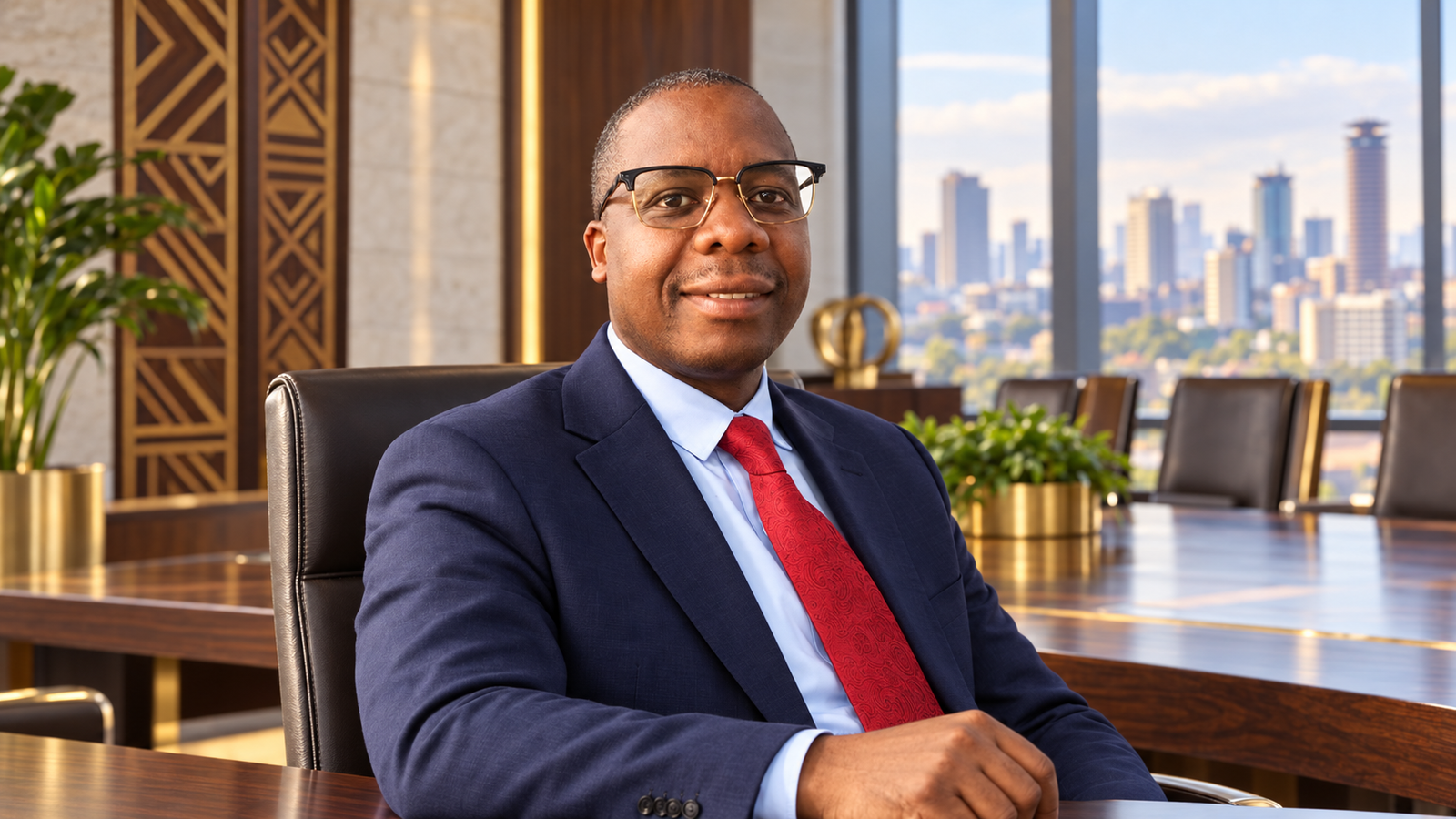

After a university field trip left his boat trapped in water hyacinth for hours, environmental engineer Joseph Nguthiru turned the experience into HyaPak—a climate-tech company converting the invasive plant into biodegradable alternatives to plastic.
For communities living around Kenya’s lakes, water hyacinth is more than a floating green plant.
When it spreads across the water, its dense mats can obstruct boats, interfere with fishing, restrict access to landing areas and disturb the ecosystems upon which families and businesses depend.
But where many people saw only a stubborn environmental problem, Joseph Nguthiru saw the beginnings of a new material.
The Kenyan civil and environmental engineer is the founder and CEO of HyaPak, a climate-tech company that transforms harvested water hyacinth into biodegradable packaging, seedling bags and other alternatives to products traditionally made from plastic.
His innovation connects two environmental challenges through one circular solution.
Removing water hyacinth helps clear affected waterways. Turning the harvested plant into packaging creates an alternative to fossil-fuel-based plastic.
In 2025, Joseph’s work earned him one of the world’s leading honors for young environmental innovators: recognition as a United Nations Young Champion of the Earth.
An Idea Born on Lake Naivasha
The inspiration for HyaPak emerged during Joseph’s university years.
As a civil and environmental engineering student, he participated in a field trip on Lake Naivasha. During the excursion, the group’s boat became trapped in thick water hyacinth for approximately five hours.
The experience gave Joseph a close and unforgettable view of the problem.
For fishermen and other people who depend on the lake, becoming trapped by the weed is not simply an inconvenience. It can interfere with work, damage equipment, reduce access to fishing areas and make movement across the water more difficult.
Joseph began asking whether the plant could become part of its own solution.
Instead of removing the hyacinth only to discard it elsewhere, could its fibers be converted into a useful material? Could harvesting the weed support local livelihoods while helping replace some of the plastic used in packaging?
Those questions eventually became his final-year university project—and later, a company.
Joseph formally incorporated HyaPak in 2022, developing the concept into a circular-economy venture based on turning an invasive plant into biodegradable products. Joseph Nguthiru
One Problem Solving Another
The brilliance of HyaPak lies in the way it connects two problems that might otherwise be treated separately.
The first is the spread of water hyacinth.
The plant can reproduce rapidly and form thick mats across freshwater surfaces. These mats obstruct movement, affect fishing activity and interfere with the ecological health of the water.
The second challenge is plastic pollution.
Plastic packaging is convenient, but many single-use products remain in the environment long after their brief period of use has ended. Seedling bags, courier packaging and protective materials can all contribute to waste when they are produced from conventional plastic.
HyaPak uses harvested water hyacinth as the raw material for biodegradable alternatives.
“On one hand there is a problem of water hyacinth, and a problem of plastic waste pollution on the other,” Joseph explained. “What we are trying to do is using one problem, the hyacinth, to solve the plastic waste pollution.”
That principle sits at the heart of the circular economy: material considered unwanted in one setting becomes valuable within another production system.
From Invasive Weed to Useful Material
The HyaPak process begins at the lake.
Water hyacinth is harvested and dried before being transported for processing. Its plant fibers are then combined with proprietary additives and converted into a biodegradable paper-like material.
That material can be developed into several types of products, including:
- Biodegradable seedling bags
- Courier and delivery packaging
- Cold-chain insulation and linings
- Seed-embedded paper
- Alternatives to selected single-use plastic products
The result gives water hyacinth a new commercial purpose.
Instead of being treated only as waste removed from the lake, the plant becomes the foundation for a product with customers and practical applications.
This shift from removal to manufacturing is what gives the HyaPak model wider potential.
An environmental cleanup becomes part of a supply chain. Local harvesting provides raw material. Engineering transforms that material. Businesses and agricultural organizations become possible customers.
The entire process begins with a plant that communities once struggled simply to clear.
Helping Restore Access to the Lake
HyaPak’s environmental impact begins with physically removing water hyacinth from affected water bodies.
Joseph’s official profile reports that the company’s activities have helped clear approximately 20 acres of lake surface. Joseph Nguthiru’s ventures
Each harvested section can help improve access for fishing boats, transport and other activity around the water.
The work is especially meaningful for communities whose livelihoods depend directly on the lake.
Fishermen need open water to reach productive fishing areas and return safely with their catch. Boat operators require navigable routes. Tourism and hospitality businesses benefit when lakes remain accessible and visually healthy.
The removal of water hyacinth can therefore have both environmental and economic value.
HyaPak adds another important element: the harvested plant does not become a new waste problem on land. It enters a production process and begins a second life as biodegradable material.
Working With Fishing Communities
HyaPak has involved local fishermen in harvesting and preparing water hyacinth.
Fishermen collect the plant and dry it before it is transported for processing. In return, the arrangement can provide an additional source of income.
This partnership places affected communities within the solution.
The people experiencing the effects of the invasive plant are not treated merely as observers or beneficiaries. They participate in the supply chain and contribute knowledge of the lake.
Public reporting has documented HyaPak working with approximately 50 fishermen around Lake Naivasha. At one stage, the operation was processing up to 150 kilograms of hyacinth per week into approximately 4,500 biodegradable packages. Associated Press
These figures illustrate how a local environmental problem can begin supporting a new green-economy value chain.
The plant is harvested from the lake, dried by community partners, processed by the company and returned to the market as packaging.
Rethinking Plastic Seedling Bags
One of HyaPak’s most practical applications is the production of biodegradable bags for tree seedlings.
Traditional plastic seedling bags are widely used in nurseries because they are inexpensive and convenient. But when seedlings are planted, the plastic covering must be removed and disposed of.
During large tree-planting campaigns, thousands of seedlings can create thousands of discarded plastic bags.
HyaPak’s alternative is designed to be planted in the soil together with the seedling.
The bag gradually decomposes instead of remaining behind as plastic waste. The company says the material can also release nutrients into the surrounding soil as it breaks down.
This creates an elegant environmental cycle.
An invasive plant removed from a lake becomes a biodegradable container used to grow and plant a tree.
The product connects waterway restoration, plastic reduction and reforestation within one material journey.
Packaging for a Changing Economy
HyaPak’s work also responds to a wider shift in how businesses think about packaging.
Online shopping, food delivery, agriculture and cold-chain logistics all rely heavily on packaging. As these industries grow, so does the need for materials that protect products without creating unnecessary long-term waste.
Consumers are also becoming more aware of what happens to packaging after they open a parcel or receive a delivery.
Businesses that adopt biodegradable materials can demonstrate environmental responsibility in a way customers can see and understand.
HyaPak’s courier packaging and cold-chain materials offer a Kenyan-developed response to that demand.




The company is not simply asking people to use less packaging. It is working to create better material options for situations where packaging is still necessary.
That is an important distinction.
Sustainability is strengthened when people and businesses have practical alternatives capable of performing the required function.
Recognized as a 2025 UN Young Champion of the Earth
Joseph’s work received major international recognition when he was named a 2025 United Nations Young Champion of the Earth.
The honor celebrates young people developing bold and practical responses to environmental challenges.
For Joseph, the award recognized more than the creation of a biodegradable material. It acknowledged a system that brings waterway restoration, waste reduction, community participation and manufacturing together.
The recognition also placed Kenyan climate innovation before a global audience.
Joseph began with a problem he encountered during a university field trip. He responded by developing a product, forming a company and building partnerships around the idea.
That journey demonstrates the power of applied engineering.
Environmental education becomes especially valuable when it helps people create solutions that can leave the laboratory, serve customers and improve communities.
Joseph’s official profile describes him as a Kenyan climate-tech engineer and the 2025 UN Young Champion of the Earth, reflecting the growing international recognition surrounding his work. Joseph Nguthiru
Engineering Rooted in Lived Experience
HyaPak is a powerful example of locally informed innovation.
Joseph did not encounter water hyacinth through a distant report. He experienced its effects while physically trapped on the lake.
That moment helped him understand the urgency of the challenge and the need for a solution that went beyond occasional removal.
His training in civil and environmental engineering gave him the tools to begin investigating the plant as a material.
This combination matters.
Technical knowledge can explain how fibers behave, how materials can be processed and what properties a finished product must possess. Lived experience reveals why the solution matters and who it should serve.
HyaPak emerged where those two forms of knowledge met.
Building an African Climate-Tech Company
Joseph’s journey also represents the growing influence of African climate-tech entrepreneurs.
The continent faces serious environmental pressures, but it is also home to engineers and founders developing solutions shaped by local realities.
These entrepreneurs understand the ecosystems, communities and economic conditions surrounding the problems they are addressing.
HyaPak is Kenyan in both origin and relevance.
Its raw material comes from an invasive plant affecting local water bodies. Its community partnerships involve people whose livelihoods depend on those waters. Its products respond to agricultural, packaging and environmental needs found across the region.
Yet the underlying idea has relevance far beyond Kenya.
Invasive plants affect water systems in many countries, while plastic pollution is a global challenge. A model developed around Lake Naivasha could inspire similar approaches wherever plant waste and packaging demand exist together.
Creating Value From What Others Avoid
Joseph’s broader approach to innovation is grounded in identifying problems many people would prefer to ignore.
Water hyacinth is difficult to manage. Plastic waste is embedded in modern consumption. Climate solutions can be expensive to develop, and young African founders often struggle to access early support.
Instead of turning away from those challenges, Joseph builds around them.
On his ventures platform, he describes a common instinct behind his projects: taking a neglected problem and turning it into something that creates value and jobs.
HyaPak is the clearest example.
The company looks at a fast-growing weed and asks what useful material it contains. It looks at plastic packaging and asks what biodegradable alternative could perform the same role.
This mindset transforms the problem from a dead end into a starting point.
Innovation That Supports Livelihoods
Environmental solutions are strongest when they also understand economic reality.
Fishermen affected by water hyacinth still need reliable sources of income. Communities surrounding the lake need opportunities, not only cleanup campaigns. Businesses need packaging that can support their operations.
HyaPak brings these interests together.
The lake provides the raw material. Community members support harvesting and drying. The company transforms the plant through engineering and manufacturing. Customers purchase the finished biodegradable products.
Every stage can contribute to the wider green economy.
This does not mean one company can remove every patch of water hyacinth or replace all plastic packaging. It shows how commercial activity can be designed to support environmental progress rather than work against it.
Inspiring the Next Generation of Engineers
Joseph’s story offers an important example for Kenyan students.
His company began as a final-year university project.
Many student projects are completed, presented and placed on a shelf. Joseph continued developing his idea until it became an incorporated venture with products, partnerships and international recognition.
That progression can encourage young engineers to look differently at the assignments they complete in school.
A final-year project can become a prototype. A prototype can become a product. A product can become a company capable of creating employment and addressing a visible community challenge.
Innovation does not always begin with a large laboratory or established corporation.
Sometimes it begins with a difficult field trip, a persistent question and a student willing to keep working after the academic requirement has ended.
Beyond HyaPak
Joseph’s environmental leadership also extends into other climate-focused initiatives.
He is a co-founder of M-Situ, which is developing solar-powered artificial-intelligence sensor systems for forest protection, and AfroClimate, an organization supporting African climate entrepreneurs through capital, mentorship and networks.
These ventures reflect a wider vision.
HyaPak addresses invasive water hyacinth and plastic alternatives. M-Situ applies technology to forest monitoring. AfroClimate helps other founders move environmental ideas toward implementation.
Together, they position Joseph not only as an inventor but also as an ecosystem builder.
He is developing solutions while helping create conditions in which other African climate innovators can succeed.
Why Joseph Nguthiru’s Story Matters
At Sisi Kenya Spotlight, we celebrate people who look closely at Kenya’s challenges and recognize the possibilities hidden within them.
Joseph Nguthiru’s story matters because he turned an experience of being trapped by an invasive plant into a company capable of creating useful, biodegradable products.
He did not treat water hyacinth and plastic pollution as unrelated problems.
He connected them.
Through HyaPak, clearing a lake can support the production of packaging. A weed can become raw material. Fishermen can become supply-chain partners. A university project can become an internationally recognized climate venture.
This is the kind of innovation that moves beyond describing a problem and begins building a response.
Turning a Lake Menace Into Possibility
Water hyacinth will not disappear because of one idea alone.
But HyaPak is changing what the plant can mean.
For fishermen, harvested hyacinth can become an additional source of income. For businesses, it can become biodegradable packaging. For tree nurseries, it can become a seedling bag that returns naturally to the soil. For students, it can become evidence that local engineering can address real environmental challenges.
Joseph Nguthiru saw a plant blocking movement across Lake Naivasha and imagined a material capable of moving Kenya toward a more sustainable future.
That vision has carried him from a university field trip to international recognition as a UN Young Champion of the Earth.
Through HyaPak, he is demonstrating that some of Kenya’s greatest environmental challenges may also contain the raw materials for its next generation of solutions.